

- 12 Sections
- 93 Lessons
- 10 Weeks
Expand all sectionsCollapse all sections
- Chapter 1INTRODUCTION OF BEEF BUTCHERY5
- Chapter 2INTRODUCTION TO DIFFERENT SECTIONS OF A SLAUGHTER HOUSE OR AN ABATTOIR5
- Chapter 3CATTLE SLAUGHTER IN MODERN ABATTOIRS34
- 3.1Overview
- 3.2Introduction
- 3.3Cattle Receiving
- 3.4Holding at Lairage and Ante-Mortem Inspection
- 3.5Stunning
- 3.6Ex- Sanguination (Sticking/Bleeding)
- 3.7Shacking and Hoisting
- 3.8Hide Washing
- 3.9Electrical Stimulation
- 3.10Removal of Foot and Shank
- 3.11Leg Steam Vacuuming/ Blow- Off
- 3.12Free Leg Hang-Off (Transfer to Trolley)
- 3.13Second Leg Hang-Off
- 3.14Fore Foot Removal
- 3.15Hide Removal
- 3.16Head Removal
- 3.17Tongue Removal
- 3.18Head and Tongue Washing
- 3.19Head and Tongue Inspection
- 3.20Steam Vacuuming Stations
- 3.21Pre-Evisceration Washing
- 3.22Tie and Separation of Weasand
- 3.23Bung Bagging, Tying and Separation
- 3.24Tail Removal
- 3.25Brisket Sawing
- 3.26Evisceration
- 3.27Spinal Cord Removal
- 3.28Final Trimming
- 3.29Final Post-Mortem Inspection
- 3.30Hot Fat Trimming and Measurement of Hot Carcass Weight
- 3.31Final Interventions
- 3.32Carcass Chilling, Primal Cutting and Packing
- 3.33Reference ( Image )
- 3.34Quiz 530 Minutes13 Questions
- Chapter 4MANUAL ON BUTCHERY TECHNIQUES : BASICS12
- 4.1Introduction to the Manual on Butchery Techniques: Basics
- 4.2Overview
- 4.3Sections :- 1
- 4.4Sections :- 2. Muscle and Carcass Structure
- 4.5Sections :- 3. Slaughterhouse (Abattoir) Structure and Sections
- 4.6Sections :- 4. Slaughter Procedures
- 4.7Sections :- 5. Carcass Cutting and Portioning
- 4.8Sections :- 6. Meat Processing and Preservation
- 4.9Sections :- 7. Food Hygiene and Worker Safety
- 4.10Sections :- 8. Muscle to Meat Conversion
- 4.11Conclusion
- 4.12Quiz 610 Minutes15 Questions
- Chapter 5MANUAL ON BUTCHERY TECHNIQUES: BASICS11
- 5.1Introduction to the Chapter
- 5.2Overview
- 5.3Module 1: Introduction to Butchery and Meat Terminology
- 5.4Module 2: Anatomy and Muscle Structure
- 5.5Module 3: Slaughterhouse Layout and Equipment
- 5.6Module 4: Slaughter and Dressing Operations
- 5.7Module 5: Carcass Cutting and Portioning
- 5.8Module 6: Cold Storage and Meat Preservation
- 5.9Module 7: Food Hygiene and Safety Practices
- 5.10Module 8: Review and Certification
- 5.11Quiz 710 Minutes13 Questions
- Chapter 6Basic Terminology for Cattle and Meat Classification5
- Chapter 7Classification of Meat by Animal Source.4
- Chapter 8Meat Components and Carcass Parts4
- Chapter 9Basic Anatomy and Connective Tissue6
- Chapter 10Personal Hygiene and Work Attire4
- Chapter 11Sections of an Abattoir7
- Chapter 12Pre-Slaughter Section8
Overview
About the Manual
This manual serves as a foundational training guide for students, trainees, and professionals entering the meat processing and butchery industry. It introduces the core principles of meat science, slaughter procedures, carcass handling, and food hygiene, focusing on both traditional and industrial practices.
Developed by Precision the manual is structured to help learners understand animal anatomy, butchery terminology, slaughter operations, meat cutting, preservation, and hygiene management through descriptive notes and process visuals.
What Makes This Manual Essential?
Butchery is a skill that blends traditional craftsmanship with rigorous scientific and hygienic standards. This course provides a structured learning path that covers the entire process—from the live animal to the final packaged cut.
You will gain a thorough understanding of:
- Industry Vocabulary: Learn the key descriptive terms for animal classifications and meat components, such as marbling and offal. (Section 1)
- Anatomy and Quality: Investigate muscle and carcass structure
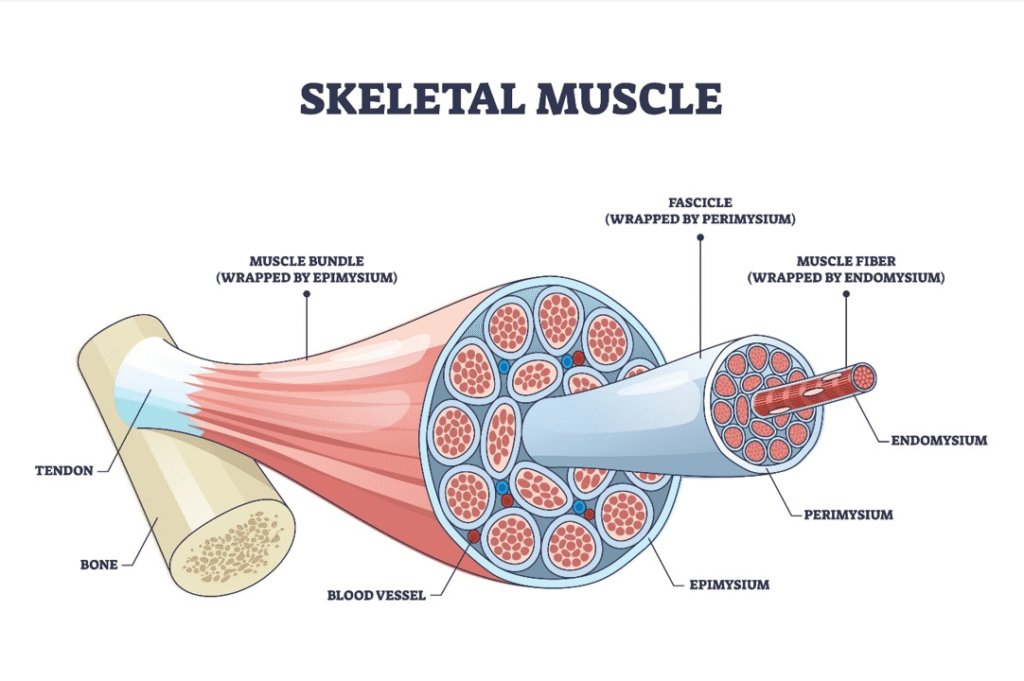
- This knowledge is not academic—it is crucial for butchery. The amount and type of connective tissue directly dictate a cut’s tenderness and, consequently, its ideal cooking method (moist heat for tough cuts, dry heat for tender ones).
- What You Will Learn
- Muscle Hierarchy: Define and differentiate between the microscopic components: Muscle Fibers, Fascicles, Endomysium, Perimysium, and Epimysium.
- The Toughness Factor: Understand why Perimysium is the primary contributor to toughness and why you must cut against the grain.
- Connective Tissue Chemistry: Clearly distinguish between Tendons (collagen, converts to gelatin) and Ligaments (elastin, remains tough and must be trimmed).
- The Unit of Trade: Define the Carcass as the starting point for all professional butchery and yield calculation.
- Mastery of these concepts will empower you to make informed decisions about trimming, portioning, and cooking every cut of meat.
- Address: INDIA
- Hours: Mon-Fri 9:00AM - 5:00PM
- Phone: +97433455629
- Email: info@precisionbutchery.com
© copyright blisstechinfo