

- 12 Sections
- 93 Lessons
- 10 Weeks
Expand all sectionsCollapse all sections
- Chapter 1INTRODUCTION OF BEEF BUTCHERY5
- Chapter 2INTRODUCTION TO DIFFERENT SECTIONS OF A SLAUGHTER HOUSE OR AN ABATTOIR5
- Chapter 3CATTLE SLAUGHTER IN MODERN ABATTOIRS34
- 3.1Overview
- 3.2Introduction
- 3.3Cattle Receiving
- 3.4Holding at Lairage and Ante-Mortem Inspection
- 3.5Stunning
- 3.6Ex- Sanguination (Sticking/Bleeding)
- 3.7Shacking and Hoisting
- 3.8Hide Washing
- 3.9Electrical Stimulation
- 3.10Removal of Foot and Shank
- 3.11Leg Steam Vacuuming/ Blow- Off
- 3.12Free Leg Hang-Off (Transfer to Trolley)
- 3.13Second Leg Hang-Off
- 3.14Fore Foot Removal
- 3.15Hide Removal
- 3.16Head Removal
- 3.17Tongue Removal
- 3.18Head and Tongue Washing
- 3.19Head and Tongue Inspection
- 3.20Steam Vacuuming Stations
- 3.21Pre-Evisceration Washing
- 3.22Tie and Separation of Weasand
- 3.23Bung Bagging, Tying and Separation
- 3.24Tail Removal
- 3.25Brisket Sawing
- 3.26Evisceration
- 3.27Spinal Cord Removal
- 3.28Final Trimming
- 3.29Final Post-Mortem Inspection
- 3.30Hot Fat Trimming and Measurement of Hot Carcass Weight
- 3.31Final Interventions
- 3.32Carcass Chilling, Primal Cutting and Packing
- 3.33Reference ( Image )
- 3.34Quiz 530 Minutes13 Questions
- Chapter 4MANUAL ON BUTCHERY TECHNIQUES : BASICS12
- 4.1Introduction to the Manual on Butchery Techniques: Basics
- 4.2Overview
- 4.3Sections :- 1
- 4.4Sections :- 2. Muscle and Carcass Structure
- 4.5Sections :- 3. Slaughterhouse (Abattoir) Structure and Sections
- 4.6Sections :- 4. Slaughter Procedures
- 4.7Sections :- 5. Carcass Cutting and Portioning
- 4.8Sections :- 6. Meat Processing and Preservation
- 4.9Sections :- 7. Food Hygiene and Worker Safety
- 4.10Sections :- 8. Muscle to Meat Conversion
- 4.11Conclusion
- 4.12Quiz 610 Minutes15 Questions
- Chapter 5MANUAL ON BUTCHERY TECHNIQUES: BASICS11
- 5.1Introduction to the Chapter
- 5.2Overview
- 5.3Module 1: Introduction to Butchery and Meat Terminology
- 5.4Module 2: Anatomy and Muscle Structure
- 5.5Module 3: Slaughterhouse Layout and Equipment
- 5.6Module 4: Slaughter and Dressing Operations
- 5.7Module 5: Carcass Cutting and Portioning
- 5.8Module 6: Cold Storage and Meat Preservation
- 5.9Module 7: Food Hygiene and Safety Practices
- 5.10Module 8: Review and Certification
- 5.11Quiz 710 Minutes13 Questions
- Chapter 6Basic Terminology for Cattle and Meat Classification5
- Chapter 7Classification of Meat by Animal Source.4
- Chapter 8Meat Components and Carcass Parts4
- Chapter 9Basic Anatomy and Connective Tissue6
- Chapter 10Personal Hygiene and Work Attire4
- Chapter 11Sections of an Abattoir7
- Chapter 12Pre-Slaughter Section8
Sections
1. Beef
- Definition: Meat obtained from cattle. Characteristics: Varies widely based on age, sex, and cut (Bull, Heifer, Steer, Cow). It is known for its robust flavor and marbling (intramuscular fat), which adds to its tenderness and juiciness.
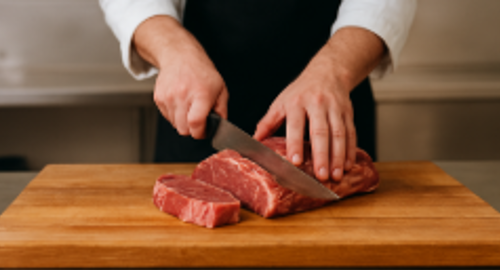
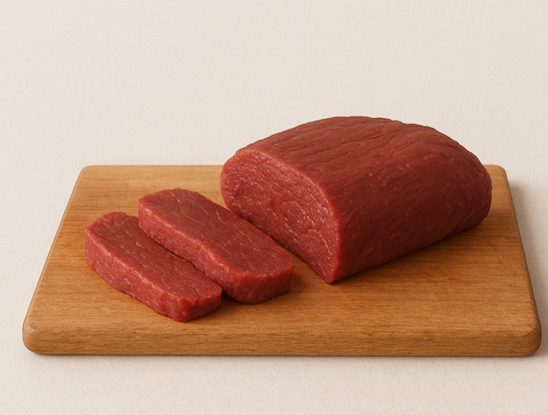
2. Cara Beef / Buffalo Meat
Definition: Meat obtained from domestic or wild buffalo. Characteristics: It is generally leaner than beef, with a lower fat content and less marbling. It has a slightly darker color and a coarser texture. It is often consumed in regions where buffalo farming is prevalent and is known for being a healthy, lower-cholesterol alternative to beef.
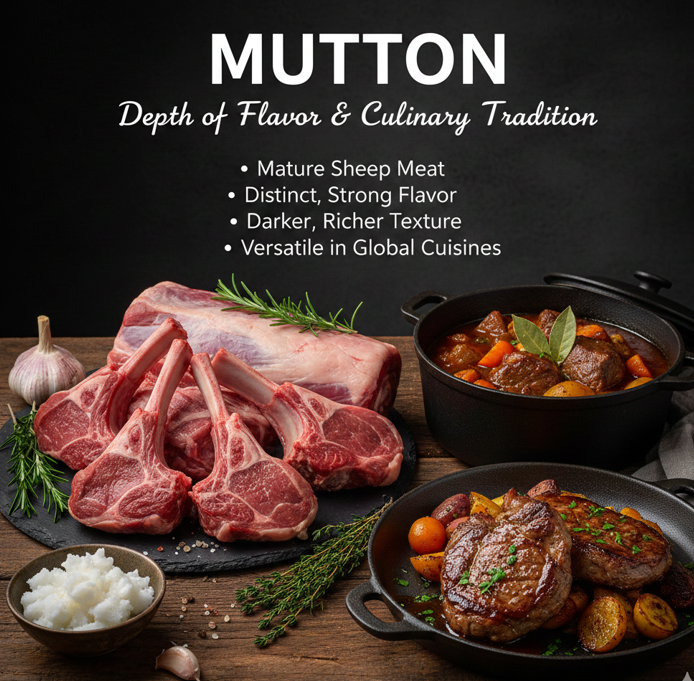
3. Mutton
Definition: Meat obtained from mature sheep (typically over one year old). Characteristics: Mutton has a distinct, strong flavor that is often more pronounced than lamb. The meat is generally darker and has a higher fat content, which is usually firm and white. It is prized in many cuisines for its depth of flavor.
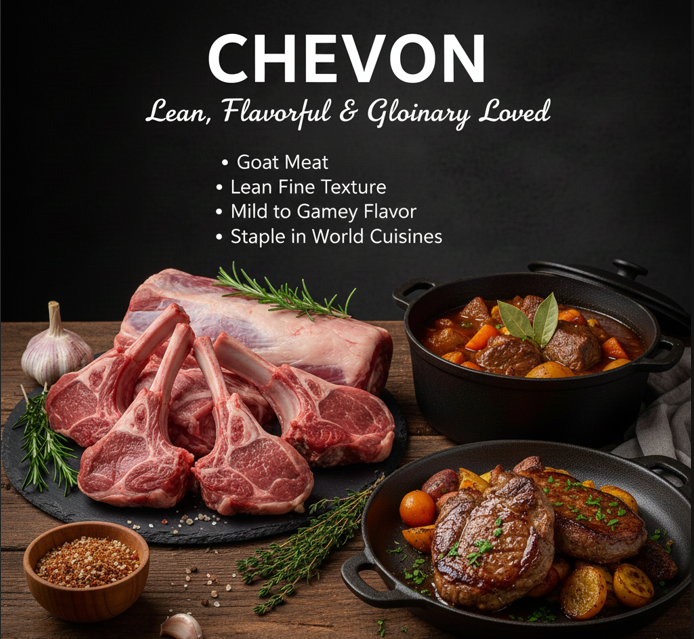
4. Chevon
Definition: Meat obtained from a goat. Characteristics: Chevon is characteristically lean and has a low-fat content and fine texture. The meat’s flavor can range from mild to strong, depending on the age of the goat, with older animals having a more pronounced, gamey taste. It is widely consumed globally, particularly in Mediterranean, Asian, and African cuisines.
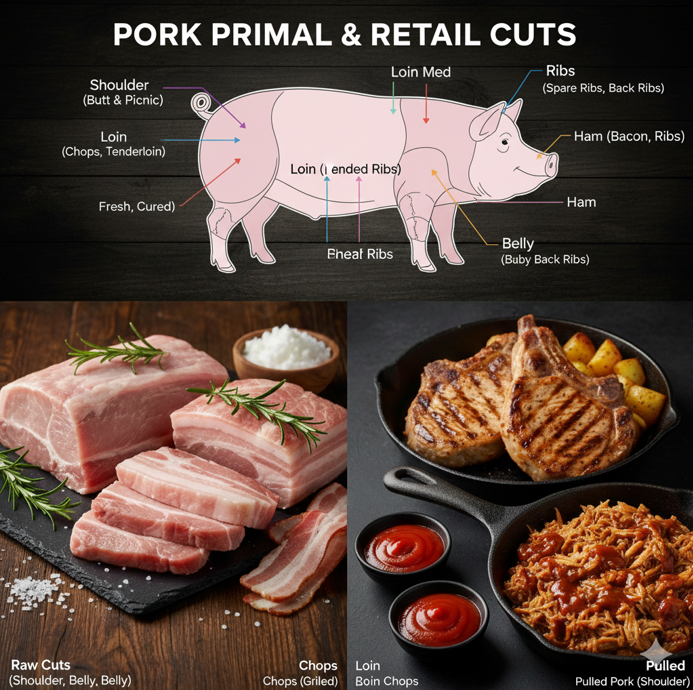
You are continuing with the Pork entry for your manual’s Descriptive Terms – II section. Since the text and characteristics are already provided, here is the image suggestion for the section:
5. Pork
Definition: Meat obtained from a domestic pig. Characteristics: Pork is one of the most widely consumed meats globally. It is classified as “red meat” but is lighter in color than beef or mutton. Pork is known for its versatility and its fat (known as lard), which is prized for cooking. Cuts range from lean (tenderloin) to fattier (belly/bacon).
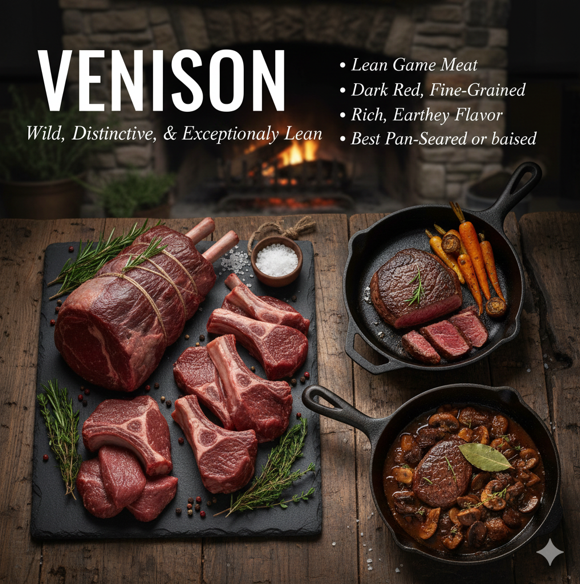
6. Venison
Definition: Meat obtained from a deer (or other game animals like elk or moose). Characteristics: Venison is a type of game meat. It is typically very lean and dark red in color. It has a strong, earthy, and gamey flavor that is distinct from domestic meats like beef. The tenderness can vary, but it often requires special cooking techniques to prevent it from drying out due to its low fat content.
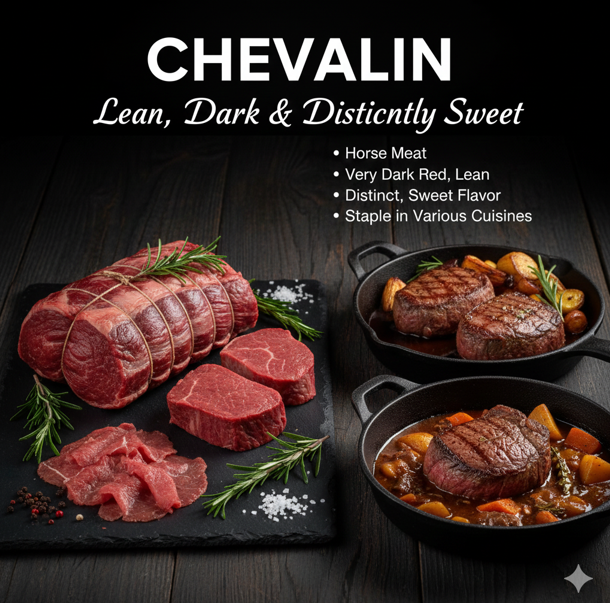
To continue with your Types of Meat section, here is the entry for CHEVALIN:
7. Chevalin
Definition: Meat obtained from a horse. Characteristics: Chevalin is a type of meat that is typically dark red due to a high myoglobin content. It is known for being very lean (low in fat) and has a distinctive, slightly sweet flavor. While it is widely consumed in various parts of the world, it is not common in many Western cultures.
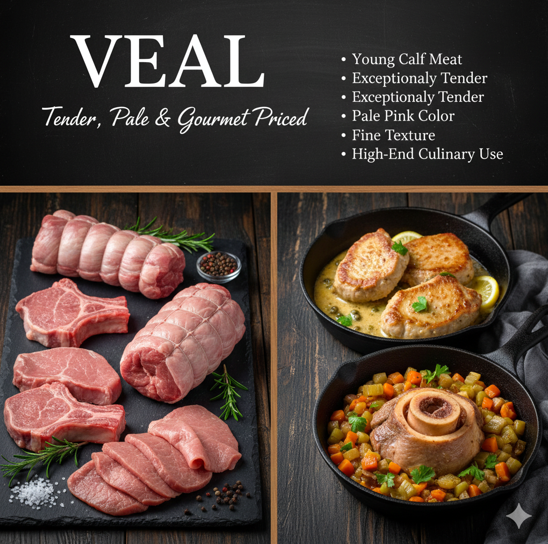
To finish the Types of Meat section, here is the entry for VEAL:
8. Veal
Definition: Meat obtained from young calves, typically slaughtered between 2 and 4 months old and weighing around 60–75 kg. Characteristics: Veal is prized for being exceptionally tender, pale-colored (due to the calf’s diet), and having a fine texture. It is primarily used for high-end or gourmet dishes.
- Address: INDIA
- Hours: Mon-Fri 9:00AM - 5:00PM
- Phone: +97433455629
- Email: info@precisionbutchery.com
© copyright blisstechinfo